Making the Case: From Litter to Evidence
Making the Case: From Litter to Evidence
Written by Hilary Jackson, Marion County Tobacco Policy Manager
On September 19, 2026, CivCom staff, Tobacco Free Partnership members, and Students Working Against Tobacco (SWAT) youth came together at Tuscawilla Park in the City of Ocala for a cleanup held in recognition of Tobacco Free Florida’s Parks and Beaches Education Month. Six youth and five adults took part in the activity, working together to document the impact of tobacco and nicotine-related litter in one of Ocala’s large public parks.
Tuscawilla Park is an expansive property, so the group focused its efforts on areas with the highest levels of human traffic, including parking lots, areas under trees, picnic pavilions, sidewalks, and areas along roadways. Participants spent about 60 minutes actively collecting litter, followed by another 45 minutes sorting, counting, weighing, and documenting what was found. Even within that limited timeframe, the group collected 248 individual litter items weighing 23.9 pounds. Of those items, 84 were cigarette butts and another 49 were tobacco or nicotine-related items, including vape parts, cigar tips, and lighters. Altogether, 133 of the 248 items collected, more than half, were connected to tobacco or nicotine use.
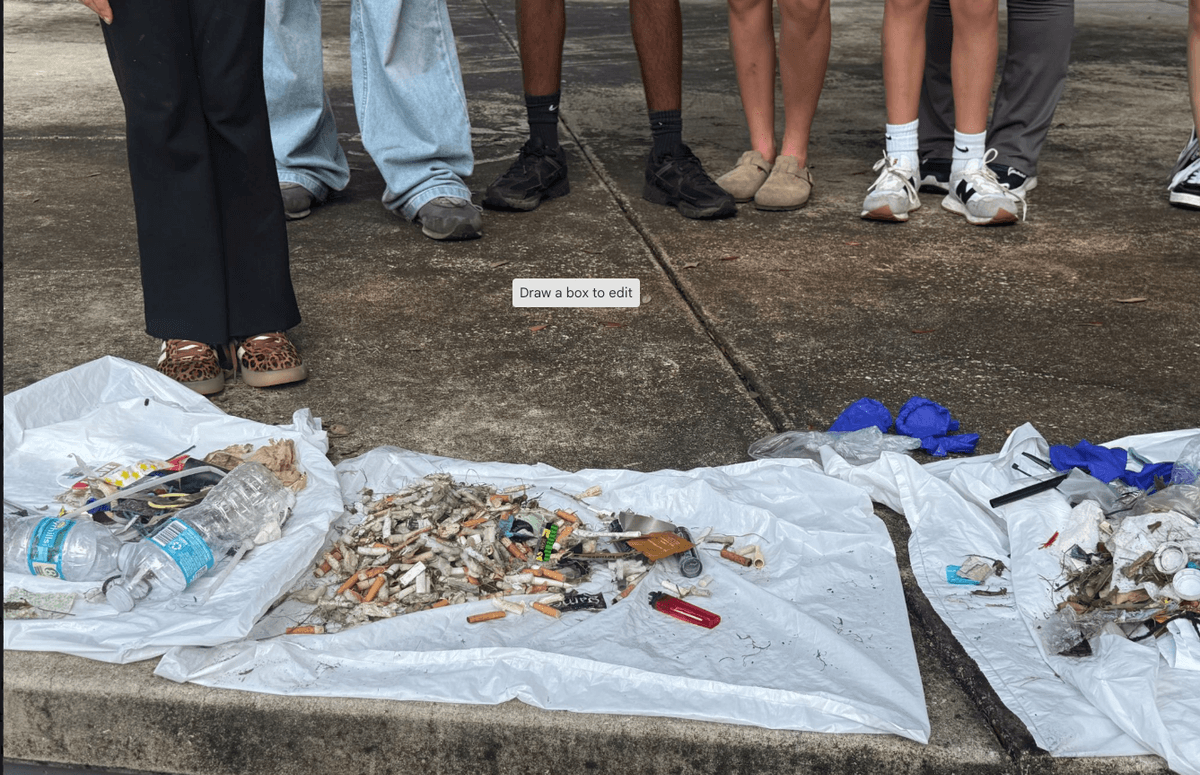
The activity was designed to do more than clean up the park. It was part of an ongoing effort to make the case for tobacco free public spaces using local evidence gathered by the community itself. The Tobacco Free Partnership and SWAT are working to provide local decision makers with clear, community-specific information about tobacco use and litter in public spaces. This same strategy has previously been used in Belleview and Dunnellon, where tobacco free parks policies were later adopted. Several of the same SWAT youth who participated in those earlier efforts also took part in the Tuscawilla cleanup, giving them the opportunity to build on their experience and continue playing an active role in local tobacco prevention efforts.
The tobacco and nicotine-related litter collected at Tuscawilla was retained as a visual educational tool for future conversations with City of Ocala decision makers. SWAT members also plan to conduct another cleanup at a different City park using the same process. Collecting comparable information from multiple locations will help strengthen the local data and provide a broader picture of tobacco and nicotine-related litter across Ocala’s public spaces.
In less than two hours, youth and community partners improved a public space, collected meaningful local data, and continued a strategy that has already helped support tobacco free park efforts in other Marion County communities. The cleanup took something easy to overlook—litter left behind in a public park—and documented it as local evidence that can help inform future conversations about healthier public spaces.